Speaking

SPEAKING

One of the world’s leading experts on human performance is also one of the world’s most dynamic and in-demand speakers

New York Times bestselling author. Three-time Pulitzer Prize nominee. Distinguished Research Fellow, Florida Atlantic University. Author of 17 books translated into 80+ languages. Published in The New York Times, Harvard Business Review, Wired, TIME, and 100+ outlets. Steven has trained 35,000 people in 156 countries across 28 industries. Steven has spoken at and trained organizations Google, Meta, Microsoft, Accenture, Deloitte, Audi, OnCloud, Bain Capital, League, Bank of Montreal, U.S. Air Force, U.S. Navy SEALs as well as dozens of others.

Beyond his training Steven conducts peer-reviewed research on performance and cognition that bridges neuroscience, psychology, philosophy, and complexity science. He is the co-author of the first ever Springer textbook on Performance Neuroscience (2026).

“One of the world’s leading experts in ultimate human performance,” —The New York Times

Endorsed by Elon Musk, Bill Clinton, Richard Branson, Tony Robbins, Ariana Huffington and Ray Kurzweil.

Book Steven


What Steven Speaks About

Dancing With Robots: How to Use AI to Own the Future—And Not Get Stupid Along the Way

AI is the most powerful cognitive prosthetic ever built—and that's exactly the problem. The minute you can outsource memory, writing, planning, pattern-recognition, even taste, you start cognitive offloading by default.

At first it feels like relief. Then it becomes dependency. Skills atrophy. Judgment dulls. Creativity narrows. Teams begin to "sound smart" while thinking less. The hidden threat of the AI era isn't replacement—it's de-skilling: leaders slowly losing the capacities that made them leaders.

Dancing with Robots teaches the opposite move: how to use AI to increase human intelligence instead of hollowing it out. The core thesis is simple: Flow + AI is the greatest advantage of the 21st century—because flow upgrades learning speed, pattern detection, decision quality, and creative output, while AI expands range, recombines possibilities, and collapses execution time.

Put them together and you get a compound effect: people don't just work faster—they become harder to compete with. This talk gives audiences a practical operating system: when to offload, when not to, how to keep your skills sharp, and how to build a human–AI workflow that produces original thinking at scale.

Book Steven


High Speed Teams: How Flow Builds a Culture of Excellence at Speed

Every leader wants a high-performance culture. Very few know how to build one. Most "culture initiatives" fail because they focus on slogans and values statements while ignoring the performance infrastructure that actually shapes behavior under pressure. As work speeds up, teams default to urgency, politics, and broken commitments. Execution slows. Trust erodes. Culture collapses right when it's needed most.

High Speed Teams reframes culture as a trainable system built on flow. Flow is the optimal state of human performance. At the team level, it's the missing link between speed, productivity, innovation, and resilience. When teams know how to drop into flow, execution accelerates, decision latency drops, motivation becomes self-sustaining, and innovation compounds.

From there, we see how flow is a culture-building engine: a proven framework for translating organizational strengths into real values and sustained excellence. Leaders learn how to identify the key flow triggers that best match their organization and then use them to create predictable, repeatable behaviors under pressure. Values stop being aspirational and start becoming operational. The result is faster execution, higher psychological safety, and teams that can sustain velocity without burning out.

Book Steven


Psychological Safety Isn't a Soft Skill—It's a High-Performance Technology

Psychological safety is everywhere in leadership conversations—and almost nowhere in execution. Most organizations treat it as a cultural aspiration: be nice, be open, don't punish failure. But under pressure, those norms collapse. Speed increases, stakes rise, and teams revert to fear, silence, and blame. The problem isn't intent. It's infrastructure.

This talk makes a counterintuitive case: flow is one of the most reliable engines for creating psychological safety inside an organization. Drawing on recent discoveries in performance neuroscience, it shows why teams in flow communicate more honestly, recover from mistakes faster, challenge each other without triggering defensiveness, and maintain trust even when the work is hard and fast. Flow shifts attention away from ego and threat and toward shared goals, clear roles, and immediate feedback—exactly the conditions psychological safety requires to survive at speed.

Leaders learn how to use flow not just to improve performance, but to stabilize culture under pressure. The talk shows how clear goals, fast feedback, autonomy, and shared ownership reduce fear-based behavior and turn mistakes into signal instead of stigma. The result is a team environment where people speak up sooner, take smarter risks, and stay aligned when it matters most. Buyers book this talk because it finally makes psychological safety actionable—not as a perk, but as a repeatable outcome of how high-performing teams work.

Book Steven


We Are As Gods: A Survival Guide for the Age of Abundance

"We are as gods and we might as well get good at it," wrote Stewart Brand—and he wasn't wrong.

Thanks to exponential technologies—AI, robotics, synthetic biology, clean energy—we now possess abilities that would have been considered divine a generation ago. The blind can see. The paralyzed can walk. Knowledge, communication, creation, and coordination operate at planetary scale. By any historical or mythological standard, humans have acquired godlike powers.

Yet there's a paradox at the heart of this moment: the more powerful we become, the less capable we feel. Anxiety is up. Burnout is endemic. Polarization is rising. Instead of awe, we experience overload. Instead of agency, we default to fear. We Are As Gods explains why. The problem isn't technology. It's that our brains, stories, and institutions evolved for a world of scarcity and linear change—and are now struggling to operate in a world of abundance and exponential speed.

This talk reframes the future through a clear, evidence-based lens. It shows how exponential technologies are already delivering abundance at scale—and why abundance comes with new psychological, social, and ethical risks. Audiences learn why information overload hijacks attention, why negativity and apocalyptic thinking spike during periods of rapid progress, and why meaning, purpose, and responsibility become the central leadership challenges of the age. The talk closes with a practical survival guide: how to think clearly, act wisely, and wield unprecedented power without losing our humanity.

Book Steven


What People Say

"I am on a Steven Kotler high. He was amazing!" — Microsoft

"Steven Kotler's presentation was cutting-edge and utterly engaging. He introduced our audience to a unique set of concepts and perspectives that left participants deeply informed, richly inspired, and with a renewed sense of purpose. I recommend him highly." — The SuperheroYou Conference

"Steven connected with our audience in an unimaginable way. His incredible breadth of neuroscience knowledge allowed him to dramatically engage our group of academics and mental health professionals. The session was high energy, innovative, humorous and at times even heart-warming. This talk was a masterful demonstration of skill and talent from a brilliant mind. An experience worth repeating!" — International Society for Neurofeedback and Research"

Steven Kotler presents a vision for the future that not only brings optimism, but inspires all who listen. His visit left our business school buzzing, and transformed students' visions for the roles business leaders can play in shaping the future." — University of Iowa School of Business

"In short, Kotler was a huge success! He closed out the discussion part of the conference and I heard the word 'flow' the rest of the weekend! Awesome choice you suggested, greatly appreciated!" — Potomac Communications Strategies

"Many thanks to you and Steven Kotler for a wonderful event. Steven generated a lot of conversation in our group and that extended well into the next day. Very successful!!" — ARCH Ventures

"Steven was FABULOUS!" — St. Mary's University

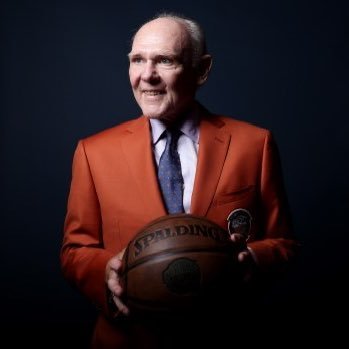
"Every coach in America needs to listen to this stuff from Kotler." — George Karl, Hall-of-Fame Coach, NBA


Endorsements

"'Stealing Fire' is a beautifully written, must-read for anyone interested in living up to their full potential. A user-manual for your hacking your brain to drive high performance." — Peter Diamandis, Founder; Co-Chairman, X Prize; Singularity University

"If you read one business book in the twenty-first century, this should be the one." — Ray Kurzweil, Inventor, Author, Director of Engineering; Chancellor, Google; Singularity University

"A fast-paced, electrified, and captivating journey into the deep potential of the human brain." — David Eagleman, Presenter of PBS's "THE BRAIN"

"'BOLD' is a visionary roadmap for people who believe they can change the world—and offers invaluable advice about bringing together the partners and technologies to help them do it." — President Bill Clinton

"'BOLD' is an essential navigation tool for any proactive CEO who wants to remain relevant." — Jim Moffatt, CEO, U.S. Deloitte Consulting, LLP

"'Stealing Fire' cracks the secret code of peak performance so that ordinary people can achieve extraordinary results." — Colonel Mark Divine, Bestselling Author; Founder, SEALFIT and Unbeatable Mind

"The result is nothing less than the most transformative and thrilling period in human history." — Timothy Ferriss, Investor and #1 NY Times Bestselling Author of "The 4-Hour Workweek"

Book Steven
Watch some of Steven's talks

What others say

"It’s difficult to think of a writer more invigorating and tuned-in than Kotler. Tomorrowland is like taking a shot of caffeine. It allows you to see into the future and to realize that you’re already there.”
David Eagleman
Neuroscientist, New York Times bestselling author of Incognito
“Diamandis and Kotler do a masterful job of explaining why we are at the start of a new era of radically increasing standards of living throughout the world. Abundance is essential reading for anyone looking for a better tomorrow.”
Elon Musk
Founder of SpaceX and Tesla
"Abundance provides proof that the proper combination of technology, people and capital can meet any grand challenge."
Sir Richard Branson
Chairman of the Virgin Group
At a moment when our world faces multiple crises and is awash in pessimism, Abundance redirects the conversation, spotlighting scientific innovators working to improve people’s lives around the world. The result is more than a portrait of brilliant minds – it’s a reminder of the infinite possibilities for doing good when we tap into our own empathy and wisdom.
Arianna Huffington
CEO, Huffington Post
"The Rise of Superman is a page-turning, game-changing account of the secrets of ultimate human performance—a must read for anyone interested in seriously raising the level of their game."
Ray Kurzweil
Director of Engineering at Google
“I loved Peter Diamandis’ and Steven Kotler’s book Abundance, their writing and their Vision. BOLD is an amazing sequel, a book that every entrepreneur should read. It is inspiring, filled with incredible insights and offers a practical how-to game plan for going big and impacting the world."
Michael S. Dell
CEO, Dell Computers